Extension Agronomy eUpdate - Issue 1127: October 29, 2026
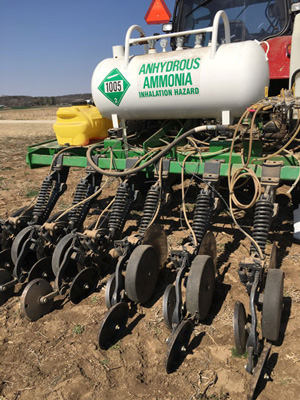 |
Considerations For Fall Applications of Anhydrous AmmoniaSoil temperatures across Kansas are still well above 50°F, making it too early for fall anhydrous ammonia applications. Waiting for cooler soils can help reduce nitrogen loss, but soil moisture, texture, and application practices also influence how well nitrogen is retained. Review K-State recommendations before making fall applications. |
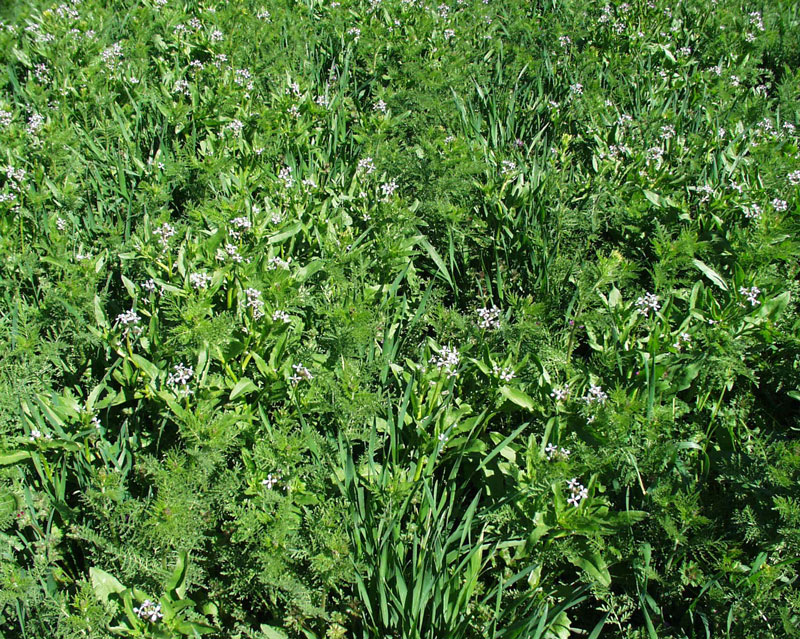 |
Control of Mustards in Wheat – Timely Treatment is ImportantMustard weeds in wheat often go unnoticed until they bloom in the spring, but waiting that long can make control more difficult and reduce yield potential. Fall applications can provide more effective control while plants are small, especially for troublesome species such as blue mustard and flixweed. |
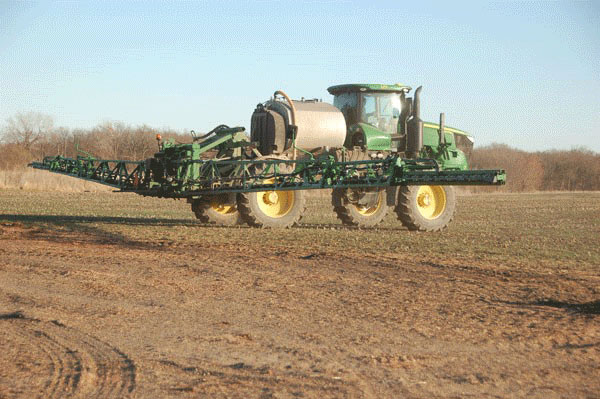 |
Get Your Spray Equipment Ready for Winter StorageBefore the next hard freeze arrives, make sure your spray equipment is properly winterized. Water left in pumps, hoses, valves, and other components can cause expensive damage during freezing weather. Review these important steps for cleaning, inspecting, and protecting your sprayer during winter storage. |
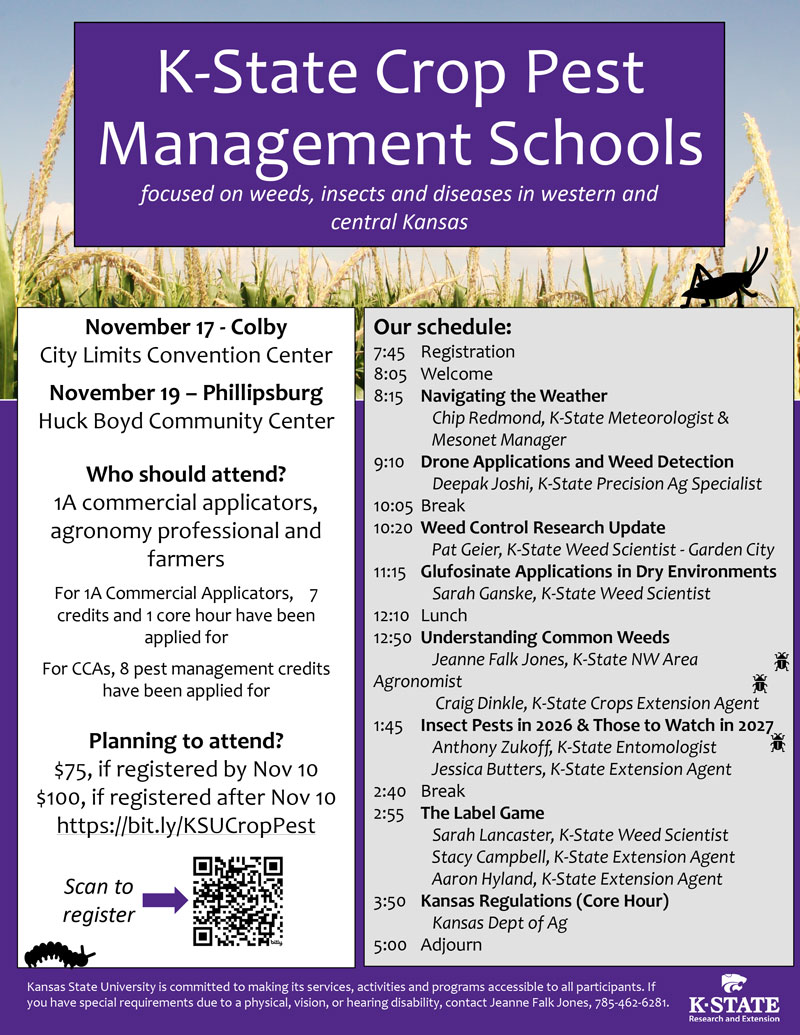 |
2026 K-State Crop Pest Management Schools – November 17 & 19Make plans to attend one of two K-State Crop Pest Management Schools this November. The programs will feature research updates and practical recommendations on weed control, drone applications, insect management, weather, and pesticide regulations. Schools will be held in Colby on November 17 and Phillipsburg on November 19, with early registration available through November 10. |