Insect Update: Fall Armyworms Continue to Increase and Army Cutworms Arriving
Fall armyworms began arriving in Kansas in mid-June, and pheromone trap counts continue to increase statewide during September (Figure 1).
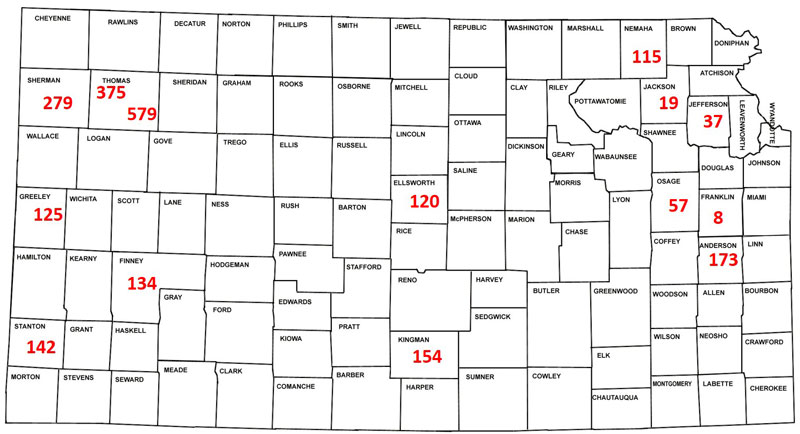
Figure 1. Total fall armyworms caught in pheromone traps in September. Map by Anthony Zukoff, K-State Extension.
Another potential fall pest, army cutworms, have been detected in traps in western Kansas since the beginning of September. Army cutworms are late-fall and early-spring pests of several Kansas crops, including alfalfa, wheat, and triticale. These moths begin migrating into Kansas in the fall from their over-summering locations in the Rocky Mountains. Trap counts of 800 or more army cutworm moths in an area through October may indicate significant caterpillar activity the following spring. Currently, northwest Kansas has the highest number of moths being trapped weekly (Figure 2).
Female moths can lay up to 1000 eggs or more. After hatching, caterpillars will begin feeding until cold weather forces them below ground. Caterpillars will complete their growth next spring as the weather warms and then burrow into the soil to pupate. Sexually immature adults emerge in late spring and migrate back to the mountains for summer. This is the “miller moth” flight that can be a nuisance some years during the spring.
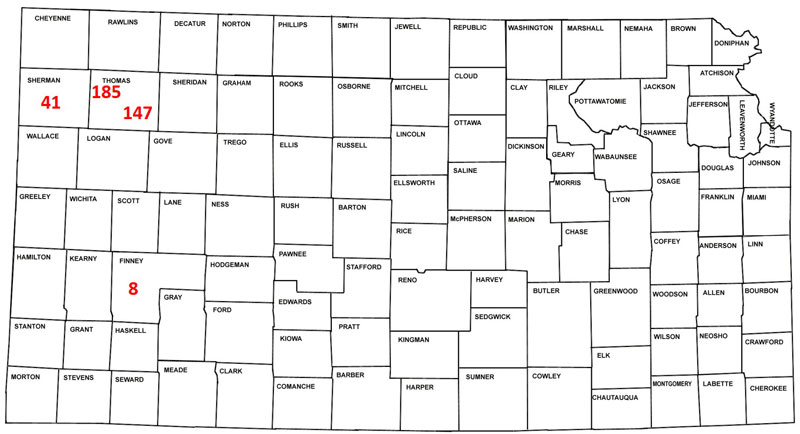
Figure 2. Total number of army cutworm moths caught in pheromone traps in September. Map by Anthony Zukoff, K-State Extension.
Given the presence of these two pests and continued warmer weather in the forecast, at-risk fields should continue to be scouted weekly for caterpillar activity. In the case of army cutworms, caterpillars may be small and hard to find; pay close attention for window-pane damage on young plants (Figure 3).
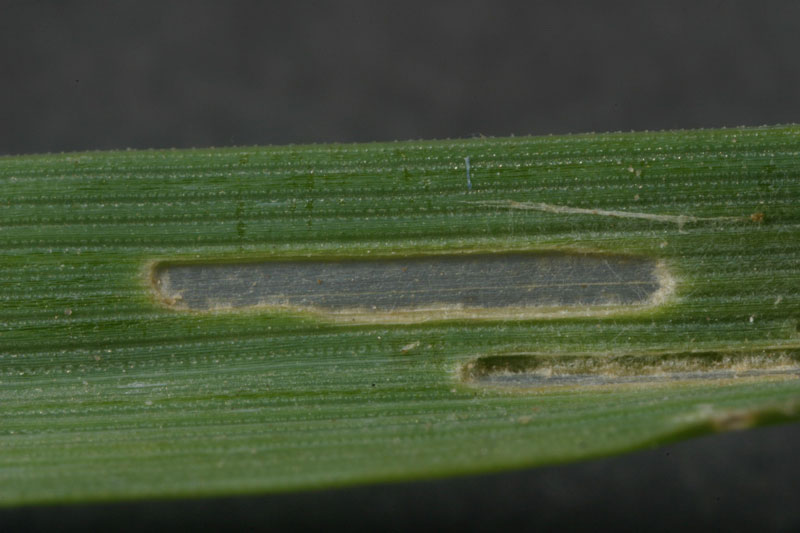
Figure 3. “Window-paning” caused by young caterpillar feeding. Photo by K-State Entomology.
Keep in mind that caterpillars increase in size at an exponential rate and most of the feeding occurs during the later stage of development. It is critical to scout early and treat, if needed, when the caterpillars are less than a half-inch long. Larger caterpillars are harder to control and do the most damage. Arrival of cooler weather may help to slow down caterpillar activity and development.
For more information regarding caterpillar management, take a look at the following Insect Pest Management Guides:
Alfalfa Insect Pest Management https://bookstore.ksre.ksu.edu/pubs/MF809.PDF
Wheat Insect Pest Management https://bookstore.ksre.ksu.edu/pubs/wheat-insect-pest-management-2025_MF745.pdf
Monitoring these key pests in 2026 would not be possible without the help of:
Amanda Burnett (Greeley Co.), Lauren Thompson (Thomas, Sherman Cos.), Jeanne Falk Jones (Thomas Co.), Kayla Jones (Stanton Co.), Grace Schneider (Kingman Co.), Craig Dinkel (Ellsworth Co.), Ron Gehl (Pott. Co.) David Hallauer (Jackson, Jefferson, Nemaha Cos.), Ryan Schaub (Osage, Franklin, Anderson Cos.), and James Coover (Neosho, Labette Cos.)
Anthony Zukoff, Extension Entomology Specialist, Garden City
azukoff@ksu.edu