Insect Update: Potato Leafhoppers in Soybeans and Alfalfa
Potato leafhoppers (PLH) remain very active in both soybeans (Figure 1) and alfalfa. These little pests will probably remain active in both crops as long as there is green leaf tissue, or whenever the first cold front comes through, bringing temperatures into the lower 30s–upper 20s˚F. This first cold front usually initiates their southern migration.
Potato leafhopper feeding in soybeans seems to have very little effect on the plant. This feeding may cause some leaf curling or cupping, plus some dried leaves, but very little actual negative impact.
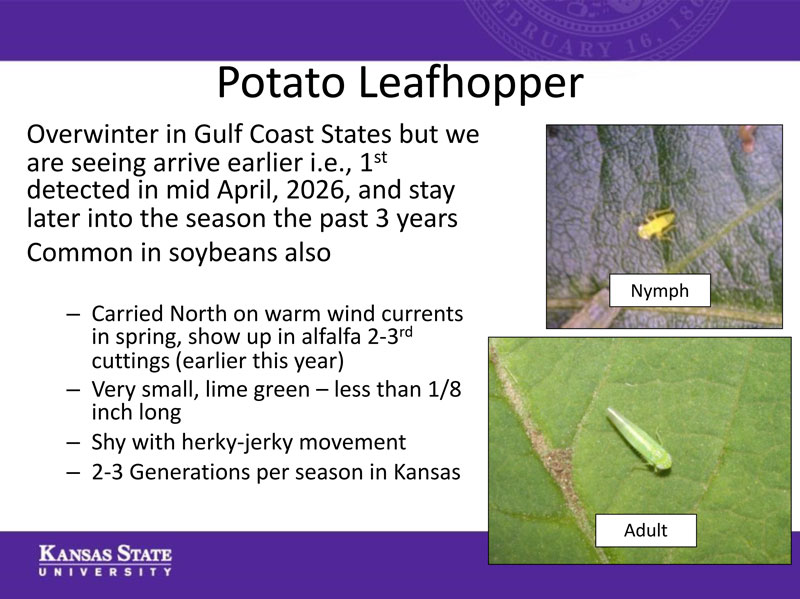
Figure 1. Potato Leafhopper identification and pest information. Graphic by Jeff Whitworth, K-State Extension.
Alfalfa, however, is a totally different story. Leaf feeding by the PLH on alfalfa usually starts as yellow patches on the edge of the leaves (Figure 2) and may proceed down the stems to encompass the entire plant if continued. This is sometimes called “hopper burn”. This may result in dead leaves, stems, and, if continued long enough, the whole plant. If this feeding occurs after the last cutting, it may interfere with the plant’s ability to produce enough photosynthates to translocate to the roots for adequate winter survival. When this feeding occurs at any other time during the growing season, it can reduce the nutritive quality and actually reduce the yield. Monitoring alfalfa fields for potato leafhoppers should continue until the first cold fronts in fall, and if PLH are still active after your last cutting, an insecticide application may be considered.
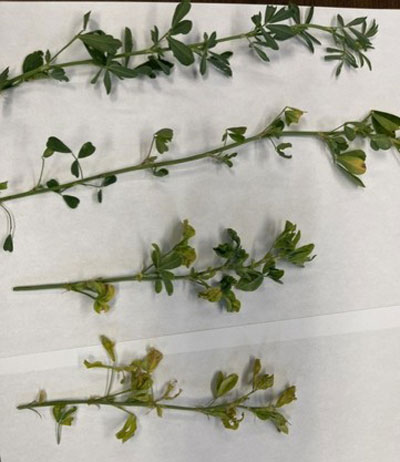
Figure 2. The alfalfa plant at the top shows no visible symptoms of PLH feeding. The two plants in the middle display early PLH feeding. The alfalfa plant at the bottom displays significant damage caused by potato leafhoppers. Photo by J.R. Ewing, K-State Entomology.
Please refer to the 2026 K-State Alfalfa Insect Pest Management Guide for more management information.
Jeff Whitworth, Entomology Extension Specialist
jwhitwor@ksu.edu