Considerations When Planting Wheat into Dry Soil
Despite recent rainfall, the latest Drought Monitor shows that 91% of Kansas is still experiencing abnormally dry or worse conditions. (Figure 1). Topsoil conditions are becoming drier in many areas of Kansas, particularly in northwest and north-central Kansas (Figure 2). The 6-10-day forecast indicates somewhat favorable conditions for normal or above-normal precipitation (Figure 3). However, with the current dry conditions across the state, farmers are evaluating the wheat drilling season ahead and developing a drilling strategy.
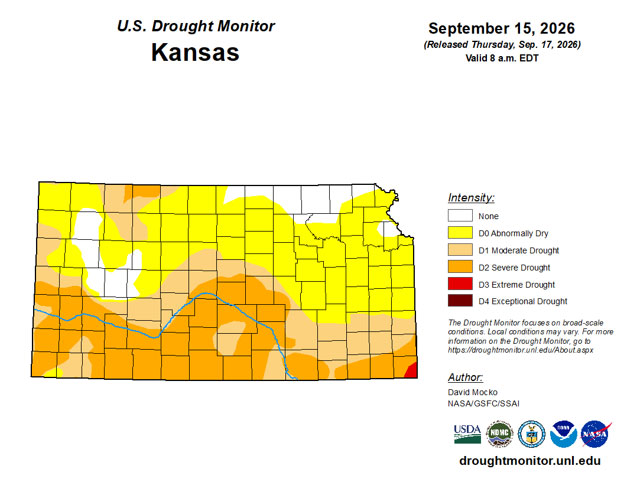
Figure 1. Current drought conditions for Kansas as of September 15, 2026. Map from droughtmonitor.unl.edu
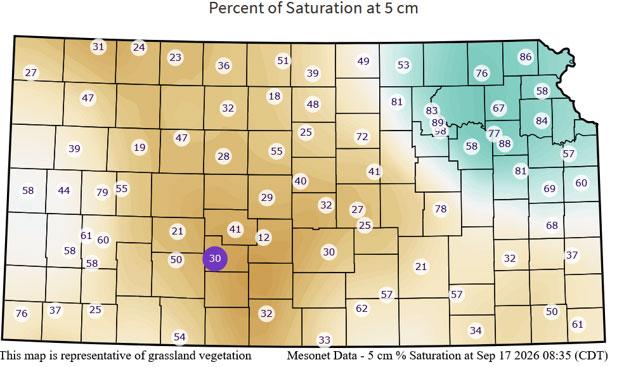
Figure 2. Topsoil moisture conditions at 2 inches (5 cm) depth, reported as % saturation, on September 17, 2026. Map by Kansas Mesonet: https://mesonet.ksu.edu/agriculture/soilmoist.
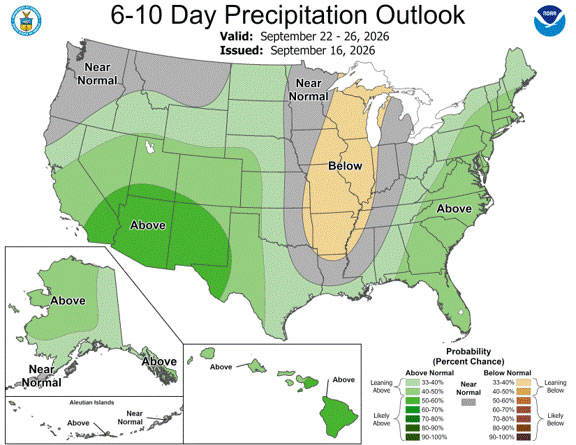
Figure 3. The precipitation outlook was issued on September 16, 2026, for the next 6-10 days (Sept 22-26). Source: CPC.
Option 1: “Dust in” the wheat
Producers can choose to “dust in” the wheat at the normal seeding depth and the recommended planting date and hope for rain (Figure 4). Some farmers may consider planting it shallower than usual, but this could increase the risk of winterkill, freeze damage, and poor crown development. Planting the wheat crop at the normal depth and hoping for rain is probably the best option where soils are very dry. The seed will remain viable in the soil until it gets enough moisture for germination.
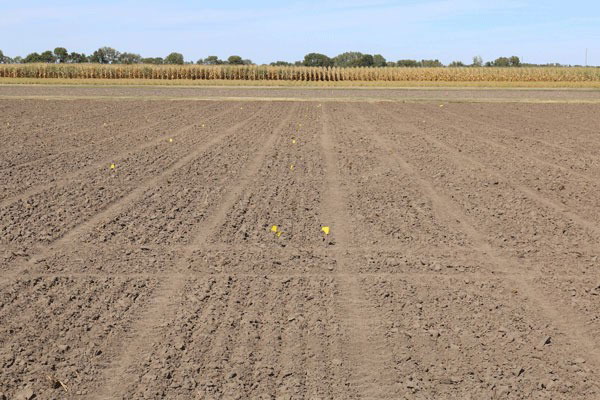
Figure 4. Wheat dusted in near Belleville in October 2015. Photo by Romulo Lollato, K-State Research and Extension.
Before planting, producers should examine the long-term forecast and estimate how long the dry conditions will persist. The current short-term precipitation outlook (6 to 10-day) is leaning toward at to above-normal rainfall (Figure 3).
Influences of El Niño suggest that normal or slightly above normal moisture is favored for much of the state through the fall. Should drier conditions occur, producers should treat the fields as if they were planting later than the optimum time, as the emergence date will be delayed. Rather than cutting back on seeding rates and fertilizer to save money, producers should increase seeding rates, consider a fungicide seed treatment, and apply a phosphorus fertilizer at planting to improve early-season development. However, producers should be cautious with in-furrow nitrogen or potassium fertilizers, as these are salts that can make it more difficult for the seed/seedling to absorb the water needed for germination. The idea is to ensure the wheat gets off to a good start and has enough tillers to achieve good yield potential, assuming it eventually rains and the crop emerges late. Wheat that emerges in October may still hold full yield potential, but wheat that emerges in November almost always has fewer fall tillers and, therefore, is more reliant on spring-established tillers and can have decreased yield potential.
Probably the worst-case scenario for wheat planted into dry soils would be a light rain that gives the seed just enough moisture to germinate but not enough for the seedlings to emerge through the soil or to survive very long, if dry conditions return. Once the coleoptile extends to the soil surface, the plant must have enough moisture to continue growth; otherwise, it will perish. This situation may worsen if producers plant wheat following a summer crop such as corn, soybean, or sorghum, which depleted subsoil moisture through late summer. The wheat stand can be completely lost without subsoil moisture to sustain growth. If late October brings cooler temperatures, dusting wheat in becomes a more interesting option as soil moisture from a possible rainfall event could be stretched further.
Option 2: Plant deeper than usual into moisture
Planting deeper than usual can work if the variety to be planted has a long coleoptile and there is good soil moisture within reach. The advantage of this option is that the crop should come up and make a stand during the optimum time in the fall. If using a hoe drill, the ridges created could help protect the soil and emerging plants from wind erosion through the winter.
It’s possible that the wheat would be planted so deeply that it would germinate but never emerge, especially if the coleoptile length is too short for the planting depth (Figure 5). Generally, it’s best to plant no deeper than 3 inches with most varieties in Kansas and the Great Plains. It is also important to remember that ridges formed by narrow press wheels can make the effective planting depth much deeper if the seed furrows fill in during a heavy rainfall event.
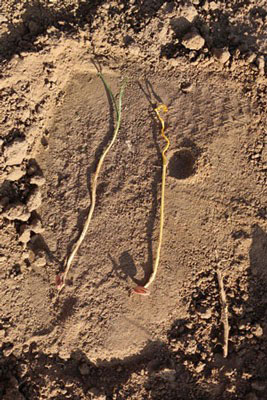
Figure 5. Deep-planted wheat can result in variable stands depending on whether the plant's coleoptile reaches the soil surface (plant on the left) or not (plant on the right). In cases where the coleoptile does not reach the soil surface, chances are that the first true leaf will emerge below ground and grow in accordion-like structure and perish. Photo by K-State Research and Extension.
Option 3. Wait for rain before planting
To reduce the risk of crusting or stand failure, producers may decide to wait until it has rained and soil moisture is adequate before planting. Under the right conditions, this would result in good stands, assuming the producer uses a high seeding rate and, if appropriate, a starter fertilizer. If it remains dry well past the optimum planting date range, the producer would have the option to keep the wheat seed in the shed until next fall and plant spring crops next year instead.
The risk of this option is that the weather may turn rainy and stay wet later this fall, preventing the producer from planting the wheat, while those who dusted in their wheat could have a good stand. There is also the risk of leaving the soil unprotected from the wind through the winter until the spring crop is planted.
Economics and crop insurance considerations and deadlines will also play a role in these decisions. Another consideration to help manage the economic risk is to delay the bulk of nitrogen application until the spring topdress application, as wheat does not require much nitrogen in the fall. This would defer expenses until an acceptable wheat stand is assured.
Romulo Lollato, Wheat and Forages Specialist
lollato@ksu.edu
John Holman, Cropping Systems Agronomist
jholman@ksu.edu
Lucas Haag, Northwest Area Agronomist
lhaag@ksu.edu
Logan Simon, Southwest Area Agronomist
lsimon@ksu.edu
Jeanne Falk Jones, Northwest Area Agronomist
jfalkjones@ksu.edu
Christopher “Chip” Redmond, Kansas Mesonet
christopherredmond@ksu.edu