Watch for Japanese Beetle Activity in Corn and Soybean Fields
Japanese beetles were first detected in Kansas in about 1992. They have been serious pests mainly in soybean fields, but occasionally in corn, in the eastern U.S., especially the “I” states – Indiana, Illinois, and Iowa. They have been steadily migrating west and are now fairly well established throughout the state.
The adult Japanese beetle (Figure 1) may be a problem in agricultural fields, but timing is key. If the adults emerge when cornfields are silking, they are attracted to the silks, where they can feed voraciously (Figure 2) and sometimes interrupt pollination if they keep the silks clipped back to within ½ inch of the ear during pollen shed. If cornfields near where Japanese beetles emerge are past silking, they often fly to young soybean fields, where they can cause concern because of defoliation (Figure 3). However, unless defoliation exceeds 50% during the vegetative stage, the plants are very resilient and can compensate for leaf feeding without any negative effects.
Adult Japanese beetles may feed intermittently for a couple of weeks between flights to nearby fields for oviposition. These adults then die, and the eggs hatch into white grubs that feed on roots for the rest of the year, overwinter, and then emerge as adults the next year to start the cycle all over again.
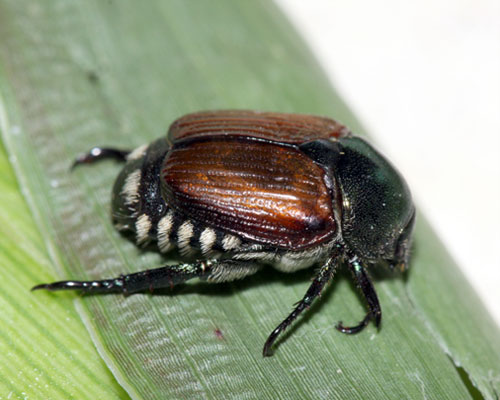
Figure 1: Adult Japanese beetle. Photo by K-State Entomology.
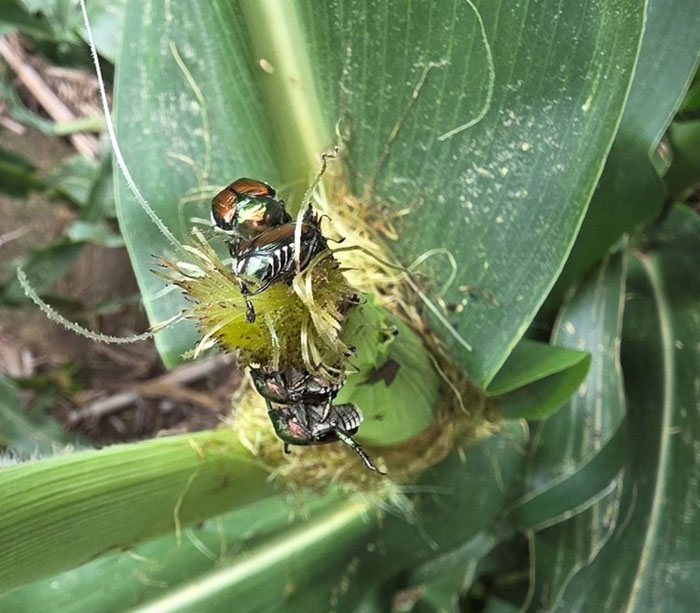
Figure 2: Japanese beetles feeding on corn silks. Photo by Derek Balzer.
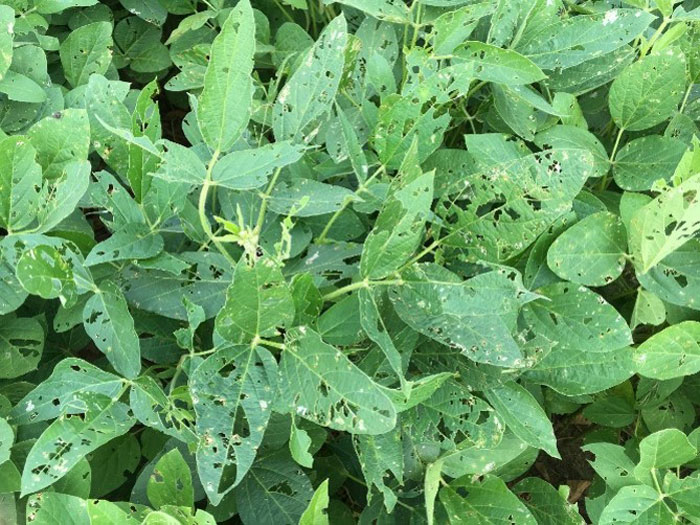
Figure 3: Soybean defoliation by Japanese beetles. Photo by K-State Entomology.
Jeff Whitworth, Entomology Extension Specialist
jwhitwor@ksu.edu