Late-Season Tiller Development Complicating Grain Sorghum Harvest in Kansas
The 2026 growing season has presented several challenges for grain sorghum producers across Kansas. Hot, dry conditions during July and August limited crop growth and development in many areas, particularly in dryland and double-cropped fields. However, rainfall returning in September and October provided some relief from drought stress and stimulated renewed plant growth. While this rainfall was welcome, it has also created challenges for producers attempting to complete harvest.
Across portions of central and southern Kansas, grain sorghum fields are showing considerable variability in maturity (Figure 1). Mature, red-colored heads can be found alongside green heads that emerged several weeks later. In some fields, late-season rainfall stimulated the development of new tillers, while in others, previously developed tillers resumed growth and produced heads after the main crop. These late-developing heads, along with green leaves and stalks, can complicate harvest by increasing the amount of green plant material entering the combine.
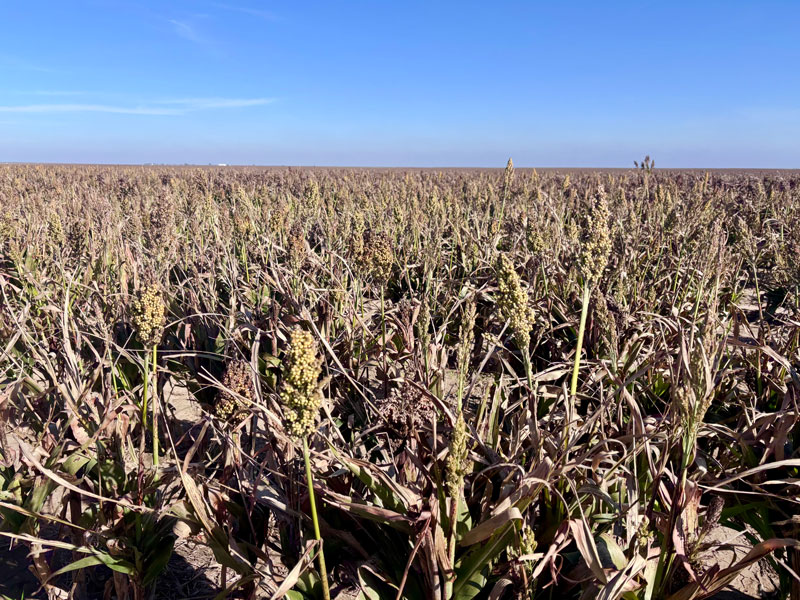
Figure 1. Immature heads delaying dry down at the end of the season. Photo taken in Finney County, KS by Logan Simon, K-State Extension.
Why are we seeing so many late tillers?
Grain sorghum has a greater capacity to produce tillers than many other summer grain crops. Hybrid characteristics, plant population, growing conditions, and environmental stress influence tillering. During periods of severe drought, sorghum can slow its growth and development as a survival mechanism. When favorable moisture conditions return, surviving plants may resume growth, including the development of tillers and reproductive structures.
This year, the combination of severe summer moisture stress followed by September rainfall created conditions favorable for renewed growth in many fields. In some cases, heads emerged four to six weeks later than those on the main stems. Although tillers can contribute to grain yield under favorable conditions, their value depends on their ability to complete grain development before the end of the growing season. Tillers emerging in September face a particularly difficult challenge because declining temperatures and shorter days limit the remaining opportunity for grain fill.
Will any late-developing heads reach physiological maturity?
One of the primary concerns with late-season tillering is whether the grain will reach physiological maturity, commonly referred to as black layer, before a killing freeze. Grain sorghum requires sufficient heat accumulation to progress through flowering, grain fill, and physiological maturity. As temperatures decline during the fall, grain development slows considerably. Even when daytime temperatures remain above normal, cool nighttime temperatures can substantially reduce the rate of development.
Consequently, sorghum heads that emerge four to six weeks after the main crop in September are unlikely to reach physiological maturity before the end of the growing season.
Grain that has not reached physiological maturity will generally have lower kernel weight, and a killing freeze can terminate any remaining grain fill. The potential yield contribution from these late heads is therefore expected to be limited, particularly when they are still in the early stages of grain development.
What happens when a freeze occurs?
The impact of freezing temperatures on grain sorghum depends on the minimum temperature reached, the duration of exposure, and the conditions within the crop canopy. A light freeze, with temperatures around 30 to 32°F, may damage or kill some leaves without completely killing the plant. Stalks and tillers can remain alive and continue to grow at a limited rate following these events. Research conducted at Kansas State University indicates that exposure to 32°F during grain fill does not necessarily reduce sorghum grain weight. However, damage increases as temperatures decline. Exposure to temperatures of 28°F or lower for two hours or more can cause severe damage and prevent further grain filling.
Field conditions also influence freeze severity. Wet soils can retain and release heat into the crop canopy overnight, while dense canopies can provide some protection from freezing temperatures. Therefore, temperatures measured at nearby weather stations may not accurately represent the conditions experienced by plants within individual fields. For fields containing large amounts of green material, a light freeze may provide relatively little benefit for harvest. While some foliage may be damaged, living stalks and tillers can continue to retain moisture. A killing freeze, in contrast, terminates plant growth and allows plant tissues to dry more rapidly.
How does green material affect harvest?
The presence of green tillers and immature heads can create several challenges during grain sorghum harvest.
Harvest efficiency: Green stalks and leaves contain substantial moisture and can be difficult for the combine to process. This material may increase plugging, reduce threshing efficiency, and slow harvest operations.
Grain moisture and quality: Immature heads can contain grain with substantially higher moisture than mature heads. When harvested together, this grain can increase the overall moisture content of the harvested sample and contribute to uneven grain quality.
Harvest timing: Producers may be tempted to delay harvest to allow green tillers additional time to mature. However, with limited heat accumulation remaining in the fall, the potential benefit of these late-developing heads may be small compared with the risks of leaving the mature crop standing.
Field dry-down: Green plant material can remain moist well after the primary heads have reached harvestable grain moisture. Extended periods of high humidity and wet weather further limit drying conditions and reduce opportunities for timely harvest.
Management Considerations
Producers managing fields with substantial late-season tiller growth should consider the following:
Evaluate maturity of the primary crop. Determine whether grain on the main stems has reached physiological maturity. Check kernels near the bottom of the head, as grain sorghum generally matures from the top down.
Assess the potential contribution of late tillers. Consider the proportion of heads that developed late and their current grain-development stage. Heads that emerged several weeks after the primary crop are unlikely to contribute substantial additional yield this late in the season.
Monitor freeze conditions and plant response. A light freeze may not terminate plant growth. Following freezing temperatures, inspect leaves, stalks, and tillers to determine whether plants remain alive. A killing freeze will generally improve the drying of green plant material.
Consider harvest aids where appropriate. Harvest aids can help terminate green plant growth and improve harvest efficiency when a killing freeze has not occurred. However, these products should only be applied when the primary grain crop has reached the maturity stage specified on the product label. Harvest aids primarily accelerate the drying of plant material rather than grain itself. Producers should carefully review product labels, preharvest intervals, and harvest timing requirements.
Avoid unnecessary harvest delays. Where the primary crop is mature, delaying harvest solely to allow late tillers to develop may not be economically beneficial. Producers should weigh the limited potential yield contribution of immature heads against the risks of lodging, weather-related grain deterioration, and additional harvest delays.
Be aware of prussic acid risks if grazing or feeding sorghum forage. Producers should be aware of potential prussic acid (hydrogen cyanide) toxicity, particularly following a frost or freeze. Young, actively growing tillers and regrowth can contain elevated concentrations of prussic acid, and frost-damaged plants may pose an increased risk to livestock. Avoid grazing frost-damaged sorghum for at least 7–10 days following a killing freeze, and longer if plants survive and produce new growth. If harvesting sorghum for forage, consider testing when toxicity is a concern and follow appropriate feeding precautions. Prussic acid dissipates during proper hay curing and ensiling, but producers should not assume that all risk has been eliminated.
Summary
Late-season rainfall has been beneficial in relieving drought stress across Kansas, but it has also stimulated renewed growth and delayed tiller development in grain sorghum fields. As a result, many producers are encountering fields with mature grain alongside green, immature heads and substantial green plant material.
With declining fall temperatures and limited heat accumulation remaining, late-developing heads are unlikely to contribute significantly to final grain yield. Light freezes may damage foliage without killing the plant, allowing green tillers and stalks to persist and continue complicating harvest.
For producers facing these conditions, the primary management objective should be to protect the yield and quality of the mature crop while minimizing harvest delays. Evaluating grain maturity, monitoring freeze conditions, and considering appropriate harvest management options will be important as the 2026 grain sorghum harvest continues.
Additional Resources
Fall Freeze Damage in Summer Grain Crops (MF-2234) - Kansas State University Research and Extension.
Managing the Prussic Acid Hazard in Sorghum- K-State Research and Extension.
Premature Frost Damage to Crops - University of Nebraska–Lincoln Extension.
Harvest-Aid Use in Grain Sorghum - United Sorghum Checkoff Program.
Logan Simon, Southwest Area Agronomist
lsimon@ksu.edu