World of Weeds – Curly Dock
Curly dock (Rumex crispus), also called sour dock, is a perennial in the smartweed family, which includes wild buckwheat. It is present year-round but is especially noticeable in the landscape now that warm-season plants are no longer growing. Red sorrel, bitter dock, and pale dock are related species that may also be found in the area.
Ecology
Curly dock is native to Eurasia but is widely distributed around the world. It is believed to have been introduced to New England in the early 1600s and can now be found throughout the United States in fields, pastures, ditches, and other sites with perennial plant cover (Figure 1). It thrives in moist, heavy soils with little disturbance. Curly dock is spread by seeds, which germinate from spring to fall in cool, moist soil. Birds do consume seeds; if leaves are consumed by livestock, nitrates and other chemicals that can accumulate in curly dock and related species may cause excessive salivation, tremors, and breathing and kidney problems, though intoxication is rare. Curly dock is known to interbreed with related species, resulting in a range of identifying features.
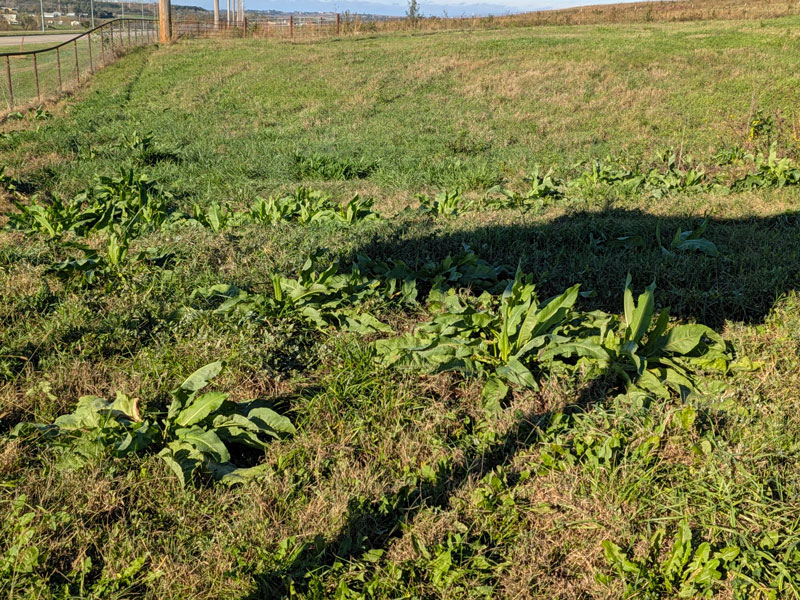
Figure 1. Curly dock growing in a low area of a pasture in northeast Kansas. Photo by Sarah Ganske, K-State Extension.
Identification
Curly dock seedlings have smooth, spatulate cotyledons attached. The stem may have a red or maroon tint. The first true leaves are egg-shaped with red spots on the upper surface and long petioles (Figure 2).
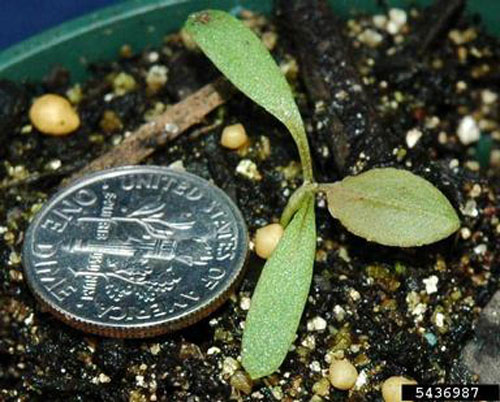
Figure 2. Curly dock cotyledons and first true leaf. Photo by Bruce Ackley, The Ohio State University, Bugwood.org.
Curly dock has a fleshy, yellow-orange taproot from which perennial plants emerge. Leaves are alternate, about 4 to 16 inches long and 1 to 5 inches wide. They lack hairs and have prominent midveins and wavy, curled margins (Figure 3). Lower leaves form a basal rosette and are attached by petioles. As new leaves emerge, the leaf margins are rolled into the blade. Leaves get more maroon/red throughout the growing season. Leaves on the flowering stems are fewer and smaller and alternately arranged.
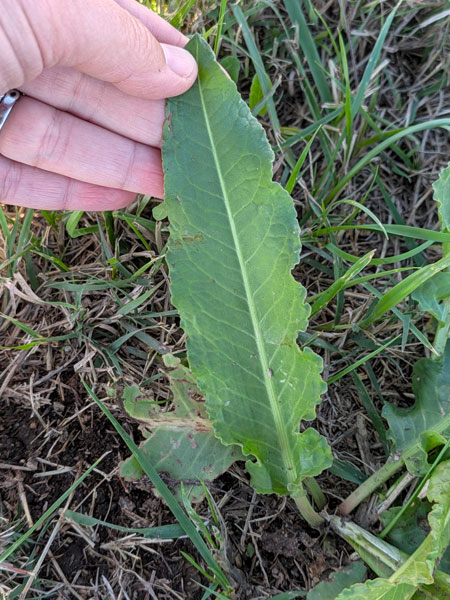
Figure 3. Curly dock leaves have a prominent midvein and wavy margins. Photo by Sarah Ganske, K-State Extension.
Flowering stems are ridged and hairless, often maroon or red in color. One key characteristic of plants in the smartweed family is the presence of a papery sheath called an ochrea at the nodes of the stem. In curly dock, ochrea are easy to see on the flowering stem and difficult to see on the basal leaves, but they are present near the soil surface (Figure 4). Stems reach up to 5 ft in height but are typically about 2.5 to 3.5 feet tall.
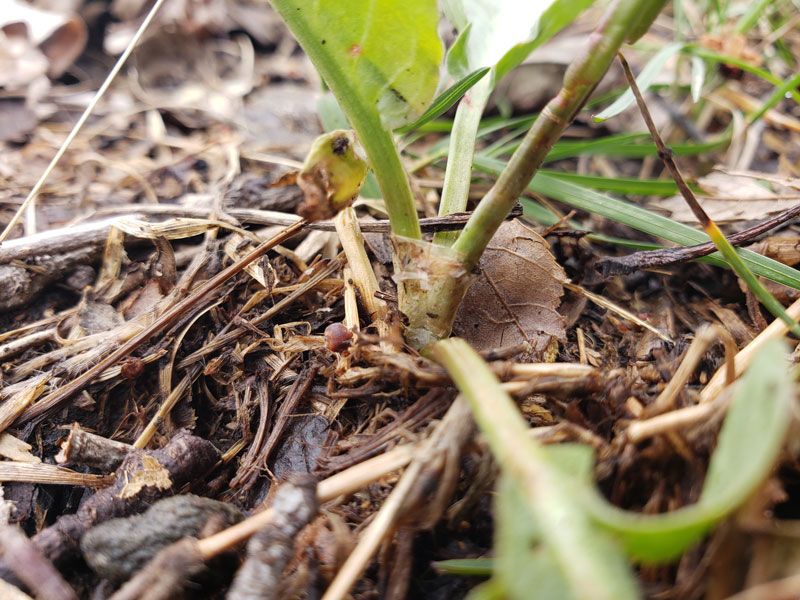
Figure 4. An ochrea is wrapped around the base of a curly dock stem. Photo by Sarah Ganske, K-State Extension.
Curly dock flowers in late spring through summer, and may flower twice in a single year. Flowers form a panicle about 6 to 24 inches long, located near the end of the stem (Figure 5). Individual flowers lack petals but do have sepals that form wings around the fruits. Seeds are produced in clusters of rust-colored, triangular achenes, each containing one seed (similar to sunflowers) that are approximately 1/10 inch long and attached by long pedicels (Figure 6). The wings are papery or corky, which allow seeds to float on wind or water as a dispersal mechanism. Seeds can remain viable in the soil for up to 80 years.
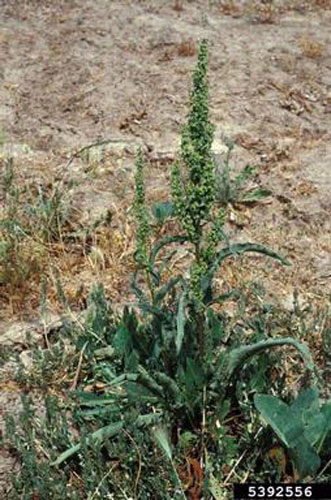
Figure 5. Curly dock flowers form at the end of the stems. Photo by John Randall, The Nature Conservancy, Bugwood.org.
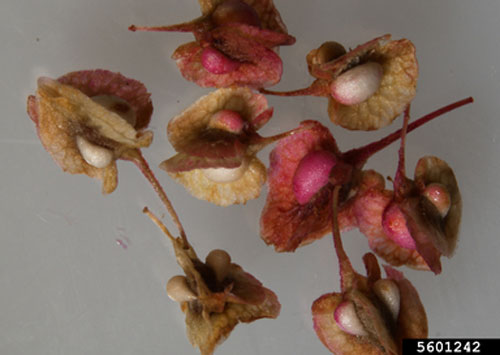
Figure 6. Curly dock fruit is rust colored, triangular, and attached by a long pedicle. Photo by Rob Routledge, Sault College, Bugwood.org.
Curly dock can be distinguished from broadleaf dock by the fruit color (broadleaf dock has yellow to brown fruits), pale dock by the length of the pedicels that connect the fruits (pale dock pedicels are less than 1.5 times as long as the fruit), and red sorrel by the leaf shape (red sorrel leaves are arrow- or lance-shaped and smaller in size).
Management
Curly dock does not tolerate tillage, so it is easily controlled in conventionally tilled fields. Mowing can reduce populations in pastures or similar situations. However, as with most perennial weeds, chemical control is challenging. In burndown situations, flumioxazin (Valor EZ, others) applied at 2 fl oz or 0.5 lb ae/A, glyphosate plus 0.25 oz tribenuron + thifensulfuron (Harmony Extra, others), or glyphosate (1 lb/A) plus 2,4-D (1 lb/A) or dicamba (0.25 lb/A) have been reported to provide some control. Herbicide efficacy will be less on larger plants. In alfalfa, 2,4-DB (Butyrac, others) applied between cuttings can reduce the number of curly dock plants present in the field. Imazamox (Beyond Xtra), or imazethapyr (Pursuit, others) can provide control of small curly dock. In pastures, metsulfurol (Escort, others), 2,4-D plus dicamba (1.25 to 2.75 qt/A Weedmaster, others), and 1 to 4 pt/A Grazon P+D can control curly dock.
The use of trade names is for clarity to readers and does not imply endorsement of a particular product, nor does exclusion imply non-approval. Always consult the herbicide label for the most current use requirements.
Sarah Ganske, Weed Science Extension Specialist
slancaster@ksu.edu