Management Considerations Before Baling Corn Residue
Kansas produces approximately 5.5 million acres of corn each year, resulting in more than 10 million tons of corn residue (stover) (Figure 1). Producers may consider baling some of the stover for its economic value as animal feed, bedding material at feedlots and dairies, or as a bioenergy feedstock for lignocellulosic ethanol, thereby providing additional income and diversifying revenue streams.
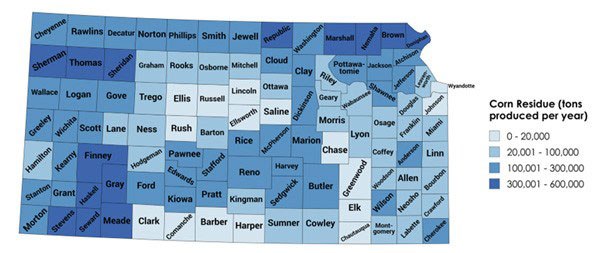
Figure 1. Estimated tons of corn residue produced per year for each Kansas county. Averages from 2011 to 2020 were calculated from crop yields and harvest index from the National Agricultural Statistics Service.
Baling corn residue could limit the services that crop residues provide in cropping systems, such as conserving soil moisture, protecting from soil erosion, cycling nutrients, and maintaining soil health, which are vital for sustainable production.
Soil moisture conservation
Keeping crop residue on the soil surface helps the soil retain more water by improving infiltration from rainfall and irrigation and reducing evaporation. Residue protects the soil from raindrop impact that can cause surface sealing, ponding, and runoff. It also shades the soil, keeping it cooler and reducing the drying effects of wind and sun.
Researchers from Kansas State University measured soil temperatures at Hugoton, Colby, and Ottawa during the 2010–2011 seasons. Removing 50-100% of corn residue increased summer soil temperatures but lowered them in winter. Overall, soil temperatures fluctuated more where residue was removed, and surface soil water content declined by 5-8%, particularly during the growing season.
Soil erosion protection
Bare soil is more vulnerable to wind and water erosion. Crop residue shields the soil from raindrop impact that can detach particles and contribute to runoff. It also slows the wind at the soil surface, reducing particle loss. At Hugoton, Colby, and Ottawa, higher rates of corn residue removal decreased the mean weight diameter of water-stable soil aggregates, indicating reduced soil structural stability (Figure 2).
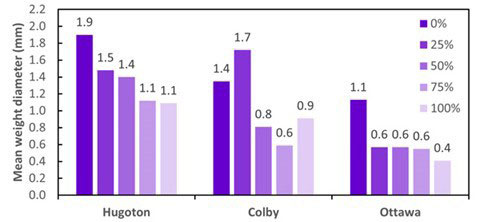
Figure 2. Impact of corn residue removal on mean weight diameter of water stable aggregates near Hugoton, Colby, and Ottawa, Kansas in 2012.
Water erosion from croplands increases sedimentation in rivers, lakes, and reservoirs, threatening aquatic wildlife, raising flood risks, and requiring costly dredging operations for remediation. Wind erosion also poses risks, degrading air quality and impacting human and animal health, particularly for individuals with respiratory conditions. In addition, dust from wind erosion can reduce visibility, contributing to traffic accidents (Figure 3), and can damage machinery through abrasion and clogging.
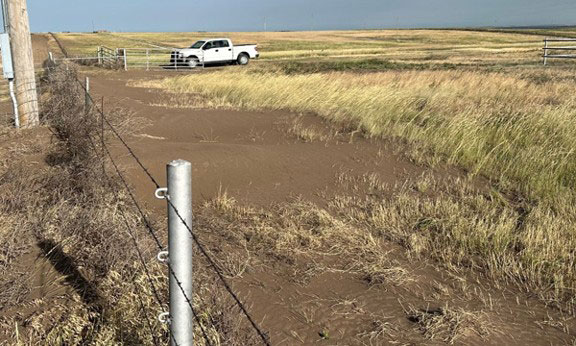
Figure 3. Soil piled up along a fence line in west central Kansas following a series of wind erosion events. Photo by Augustine Obour, K-State Research and Extension.
Topsoil loss degrades soil productivity, especially in the long term. Most agricultural soils in Kansas have a “T” value (tolerable soil loss) of 4-5 tons per acre per year, about the thickness of a dime. To limit water erosion, 30% or greater ground cover may be needed to reduce erosion to “T” or less, especially in fields without erosion-control structures such as terraces. While flat stubble is very effective in limiting water erosion, standing stubble is essential for preventing wind erosion. K-State researchers found that wind erosion was effectively prevented when soil was at least 50% covered by crop residue, and leaving some standing residue after baling helps capture snow and reduce wind erosion (Figure 4).
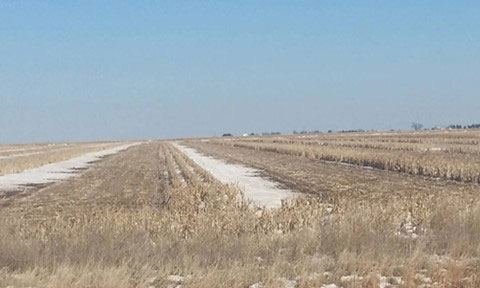
Figure 4. Field where stalks were baled, but some standing residue remained. Photo by John Holman, K-State Research and Extension.
Nutrient cycling
Crop residue is often regarded as a valuable source of nutrients. Significant amounts of nutrients, such as nitrogen, phosphorus, potassium, and sulfur, are left in corn residue following harvest (Figure 5), which can be recycled back to the soil through residue decomposition. Higher fertilizer costs often make crop residue nutrients more valuable than previously recognized, as decomposition occurs.
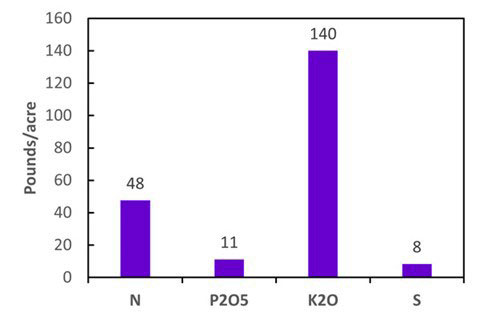
Figure 5. Amounts of nitrogen (N), phosphorus (P2O5), potassium (K2O), and sulfur (S) remaining in the residue following the harvest of a 200 bushel/acre corn crop.
Final considerations
While baling corn residues can provide additional income, it may harm soil and crop health and long-term sustainability.
- Maintaining crop residues on the soil surface enhances soil water storage by increasing water infiltration and reducing evaporation.
- Crop residue protects the soil from the full impact of water droplets, which can cause soil particles to detach and be carried by runoff.
- Crop residue reduces wind speed at the soil surface, which can also cause detachment of soil particles.
- Significant amounts of nutrients can be recycled into the soil with the decomposition of corn residue following harvest.
For more information on considerations before harvesting crop residue, see the publications:
Crop Residues: Abundance and Considerations for Alternative Uses from the K-State Research and Extension Bookstore
Soil and Crop Response to Stover Removal from Rainfed and Irrigated Corn from Global Change Biology Bioenergy
Wind Erosion Potential from Stover Harvest in the Central Plains: Measurements and Simulations from Soil & Tillage Research.
Logan Simon, Southwest Area Agronomist – Garden City
lsimon@ksu.edu
DeAnn Presley, Soil Management Specialist
deann@ksu.edu
John Holman, Cropping Systems Agronomist – Garden City
jholman@ksu.edu