Herbicide Control of Biennial Weeds in the Fall
Biennial plants, or plants that typically take two years to complete their life cycle, are common weedy species on agricultural lands across the state. Most thistle species, common mullein, hemlocks, and teasels are examples of weedy biennial species in Kansas. Biennials emerge as low-growing rosettes in the first year of their life and then produce a flowering stem or “bolt” the following year, although some species can bolt in the same year as emergence in the right conditions.
Biennial species are most vulnerable to herbicides when they are in the rosette stage and actively drawing down resources into their roots. Biennials are much easier to find when they’re bolting, but they are actively moving resources upwards to support reproduction at this stage of growth. As a result, they’re unlikely to be controlled with foliar herbicide application, which requires translocation to the root system to be effective. Mowing can be effective as a control option when applied after bolting and before seed set, but plants may rebolt and require repeat removals to achieve control.
The fall season presents a great opportunity to control biennial weeds with herbicides while they are rosettes before they bolt the following year. Fall applications can have the added benefit of reducing the chances of off-target impacts to nearby desirable vegetation that has gone dormant for the season. If you noticed a stand of biennials this season, consider revisiting the area now to look for rosettes that can be treated now before the next growing season.
Musk Thistle
Typically emerges as a rosette in the fall (Figure 1) and can be effectively controlled with several herbicides including 2,4-D LVE at 2 lbs/acre, dicamba + 2,4-D amine at 0.25 + 0.75 lbs/acre, aminopyralid at 3 to 5 fl oz/acre (Milestone), aminopyralid + metsulfuron at 1.5 oz/acre (Chaparral) and picloram at 0.5 pt/acre (Tordon 22K). Products containing picloram and aminopyralid will not only control rosettes treated in the fall but also provide sufficient carryover to control emerging seedlings the following spring. Other biennial thistle species, such as Bull thistle, can also be controlled with these herbicides when applied at the rosette stage.
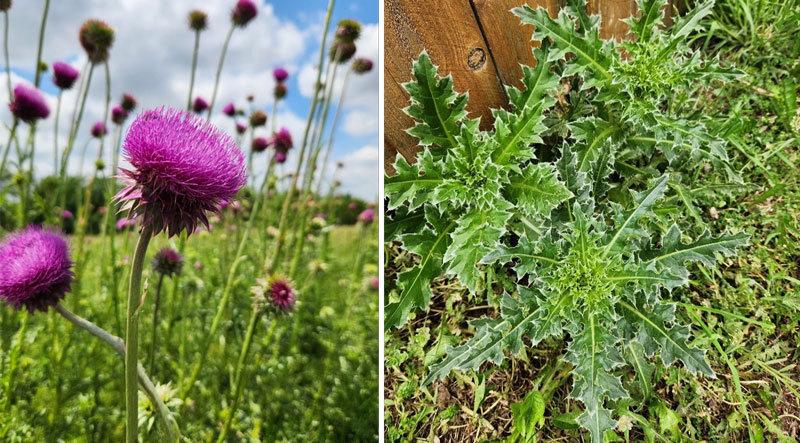
Figure 1. Musk thistle flower (left) and rosettes beginning to bolt (right). Photo credit: Molly Reichenborn, K-State Extension.
Common and Cutleaf Teasel
Rosettes for these species typically emerge in spring and fall and remain active through fall and early winter (Figure 2, Figure 3). Aminopyralid 4 to 7 fl oz/acre (Milestone), aminopyralid + 2,4-D at 1.5 to 2.1 pt/acre (Grazon Next HL), imazapic 8 to 12 oz/acre (Plateau), and picloram + 2,4-D at 4 to 6 pt/acre (Grazon P+D) can be used for teasel control.
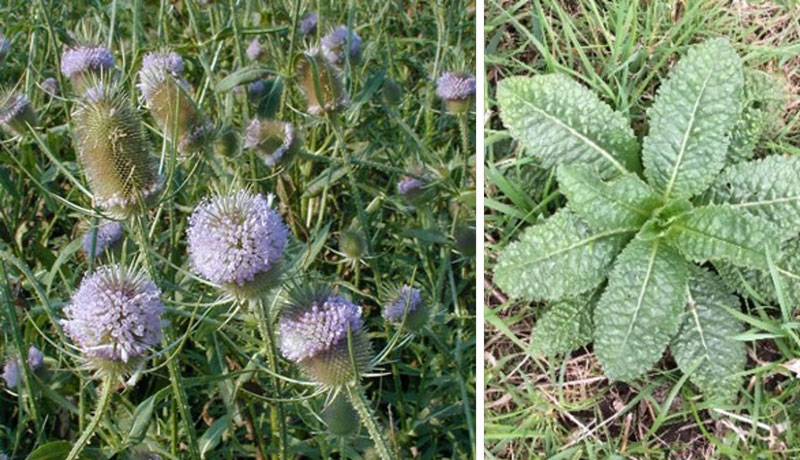
Figure 2. Common teasel flower heads (left and rosette (right). Photo credit: Mike Haddock/kswildflowers.org (left) and Missouri Department of Agriculture (right).
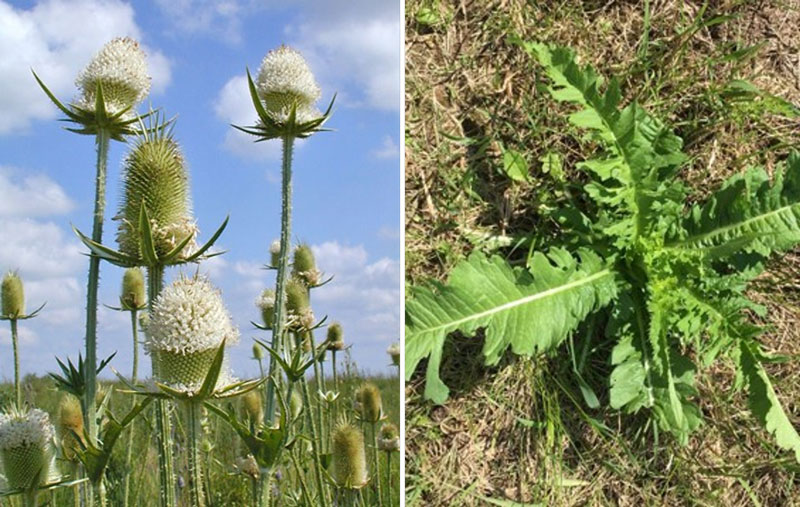
Figure 3. Cutleaf teasel flower heads (left) and rosette beginning to bolt (right). Photo credit: Mike Haddock/kswildflowers.org (left) and Missouri Department of Agriculture (right).
Common Mullein
Rosettes typically emerge in the spring but can also emerge in the fall (Figure 4). The fuzzy texture on the surface of common mullein leaves can limit herbicide uptake, and adding a compatible surfactant to your herbicide tank mix is recommended. Metsulfuron at 1 to 2 oz/acre (Escort), aminopyralid at 5 to 7 fl oz/acre (Milestone), aminopyralid + 2,4-D at 1.5 to 2.1 pt/acre (Grazon Next HL), and metsulfuron + chlorsulfuron at 0.625 to 1.25 oz/acre (Cimmaron Plus), among others, are effective on common mullein when applied in the rosette stage.
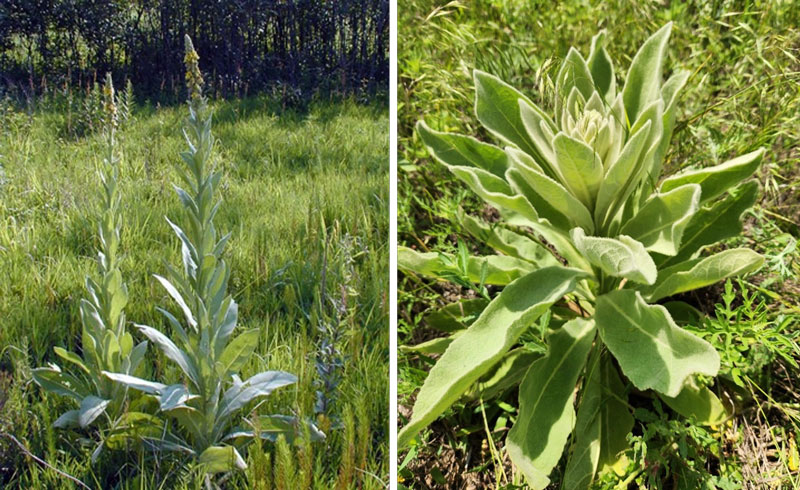
Figure 4. Common mullein flowering (left) and rosette beginning to bolt (right). Photo credit: Mike Haddock/kswildflowers.org (left) and Molly Reichenborn, K-State Extension (right).
Take Home Message
The rosettes of many biennial species are receptive to herbicide application during the fall, and applying now can avoid missing an effective window for control before a hectic spring season. Aim to apply herbicides on a sunny day before the first hard frost, when air temperatures are 50°F or above.
For more information on herbicide options for biennials and other weedy plants, refer to the 2026 Chemical Weed Control Guide for Field Crops, Pastures, Rangeland and Noncropland.
The use of trade names is for clarity to readers and does not imply endorsement of a particular product, nor does exclusion imply non-approval. Always consult the herbicide label for the most current use requirements.
Molly Reichenborn, Range Management Extension Specialist
mreichenborn@ksu.edu
Sarah Ganske, Weed Science Extension Specialist
slancaster@ksu.edu