Planting Cool-Season Perennials: Smooth Bromegrass
Smooth bromegrass is one of the most important cool-season grasses in the eastern half of Kansas. It grows best during months with cooler weather, primarily March through June and September through November, becoming semi-dormant during the hot, dry summer months. Historically, these fields may have had grubworms as an insect problem, but since 2021, fall armyworms have been the primary pest of these stands from south central up to the northeast corner of the state. The 2025 infestations and long, hot fall led to limited bounceback in our bromes stands. As for 2026, brome has faced a warm winter and spring, some fall armyworm damage, and weedy encroachment from species taking advantage of the heat and thinned areas with weak brome growth. With so many fields looking tough, producers want to reestablish their stand this fall or spring.
Planting Timing
Smooth brome can be planted (or replanted) in late summer, early fall, winter, or early spring in different regions of Kansas (Figure 3). However, late fall and winter planting is not recommended on droughty claypan soils because smooth bromegrass will not survive if planting is followed by hot, dry weather conditions. While the establishment of cool-season grasses is most successful with late summer or early fall plantings, replanting in late fall, especially with a dry forecast, is a risky decision for farmers in eastern Kansas. Additionally, seed and fertilizer prices are very high, leading to a less-favorable planting scenario.
Seed Bed Preparation and Fertility
Brome prefers a clean, firm, and weed-free seedbed. Many producers opt for no-till seeding to minimize erosion and protect soil structure during establishment, and can pair it with nonselective herbicide application to reduce weed pressure before planting.
Brome can handle soils with a pH of 5.5 but will perform best at a near-neutral pH (~7.0). A soil test should be taken well ahead of planting to determine lime and fertilizer needs, and needed lime and phosphate should be incorporated into the seedbed before planting. About 30-40 pounds of N per acre should be applied at or before planting. If you’re planning to replant your brome stand this fall, the time to collect a soil sample is now, if you have not already tested your soil to inform soil amendments or fertilizer before planting.
Planting Depth & Rate
Planting 15 – 20 lbs Pure Live Seed (PLS) per acre when drilled ¼ to ½ inch in depth. Broadcasting is usually not advised unless it is for renovating dead patches, but it can be done by planting 20 lbs of PLS, followed by seed incorporation using a cultipacker or another method.
Varieties
Common varieties to Kansas include Achenboch, Southerland, and Lincoln, as they were all developed in the 1940s and 1950s for the southern Great Plains. Some seed dealers may sell it as Variety Not Stated or VNS. Be careful when ordering brome seed from out of state, as other perennial brome species exist that are not smooth brome and have limited knowledge on their success in the state (i.e., meadow brome, mountain brome).
In some fields, plants may have started to grow new leaves using their reserves after a late cut, and the worm invasion was hard to control (or not controlled in time). Some of the fields also have low-nutrient availability, which makes the regrowth challenging and creates irreversible damage.
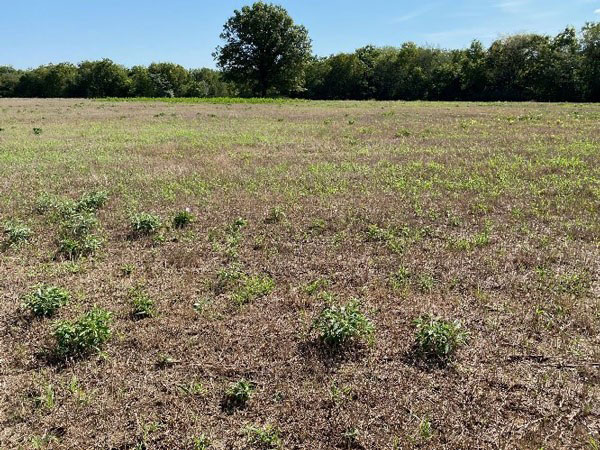
Figure 1. Bromegrass field struggling to regrow. Photo by B. Pedreira, K-State Research and Extension.
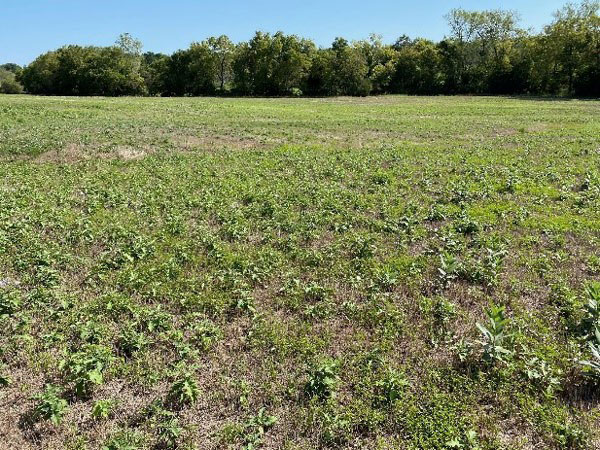
Figure 2. Bromegrass field taken over by weeds. Photo by B. Pedreira, K-State Research and Extension.
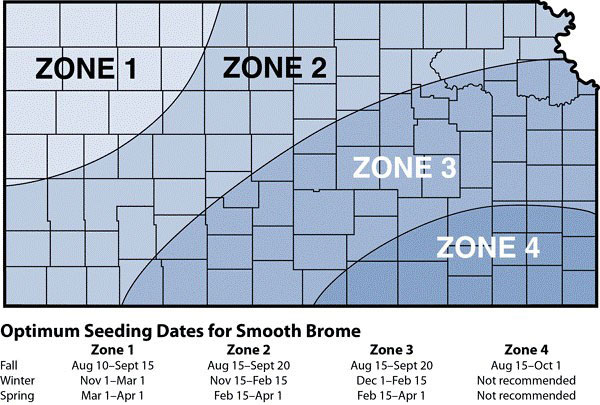
Figure 3. Optimum seeding dates for smooth brome in Kansas. Map from K-State Research and Extension.
Final Considerations
At this point, we are at the start of the optimal planting window for smooth brome across most of the state (Figure 3). We have been facing hot temperatures, moderate chances of rain, and the threat of fall armyworms has been noted in southeastern and south central counties SE. Some FAW activity has been reported heading north, along with other feeding caterpillars, making ID and scouting as important as ever. Depending on the state of the current stand, soil test results, and weed pressure, you may want to wait until more favorable weather conditions – cooler temperatures and forecasted rain before replanting. If the fall window is missed, the best option may be to control weeds and wait to replant next year. If spring planting is considered, weed control of winter annuals and worm scouting are essential in the early stages to ensure adequate establishment.
Whether maintaining a current stand or replanting a new stand, smooth bromegrass requires annual fertilization for optimum production and to assure long-term productivity. Soil testing of bromegrass pastures and meadows will provide an accurate picture of available nutrients, with particular attention to pH, phosphorus, and potassium. Keep in mind that every time a hayfield is cut, around 12 lbs of phosphorus and 40 lbs of potassium are removed per ton of forage harvested.
Tina Sullivan, Northeast Area Agronomist
tsullivan@ksu.edu
Molly Reichenborn, Rangeland Management Specialist
mreichenborn@ksu.edu
Romulo Lollato, Wheat and Forages Specialist
lollato@ksu.edu