Late-Season Insect Pest Considerations and Bt Stewardship in Cotton
Although late-season insect pressure varies from year to year, regular scouting remains the best way to identify problems before economic losses occur. The following sections outline current recommendations for monitoring and managing stink bugs and bollworms in Kansas cotton, while emphasizing the importance of preserving the effectiveness of Bt technologies.
Stink Bugs
Stink bugs are an infrequent pest of cotton grown in Kansas and are primarily a threat to younger bolls. These insects are present on various hosts throughout spring and can move into cotton as summer begins. Stink bugs have piercing-sucking mouthparts that cause external lesions on developing bolls, but the major risk is internal damage that can lead to lint staining and boll rot. Stink bugs can easily go unnoticed in the complex canopy of a cotton field (Figure 1).
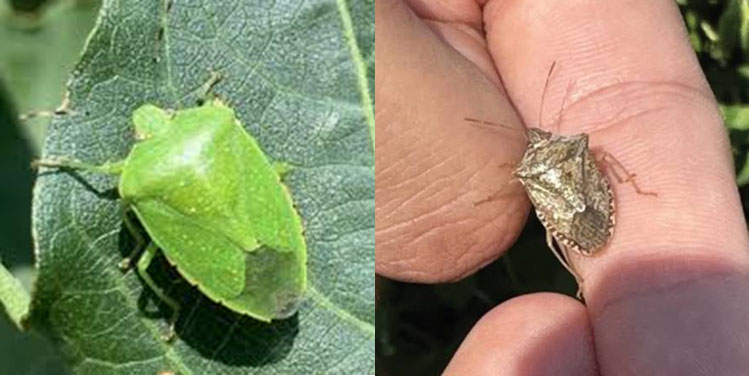
Figure 1. Adult green (left) and brown (right) stink bugs. Photos courtesy of G. Beniwal and A.M. Faris, Oklahoma State University Entomology and Pathology.
Scouting for Stink Bugs and Control Options
Confirming the presence of stinkbugs in a field can be done using various sampling methods, and starting at field edges is a good way to quickly determine whether this pest is present. However, scouting several locations throughout the field for internal boll damage is the most important way to assess potential economic losses. Treatment decisions should be based on the percentage of bolls with internal damage (warts on the inner boll wall or stained lint) (Figure 2). External lesions caused by feeding can indicate internal damage, but not always, so opening bolls for inspection is critical.
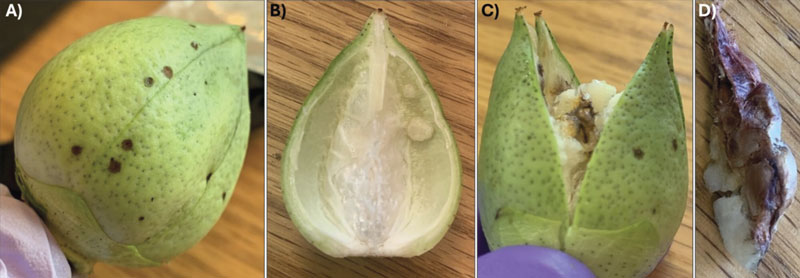
Figure 2. Stink bug damage to cotton bolls. A) External lesions. B) Warts on the inner wall. C) Damaged locule that will produce stained lint. D) Locule exhibiting symptoms of cotton boll rot. Photos courtesy of G. Beniwal, Oklahoma State University Entomology & Plant Pathology.
Injury threshold depends on the week of bloom in the field being scouted. During the first two weeks and last three weeks of bloom, treatment (Table 1) should be considered if 30 to 50 percent of bolls show internal damage. Between weeks three and five of bloom, when stink bug mouthparts easily penetrate boll walls, threshold drops down to only 10 percent of bolls showing internal damage. Aside from chemical control options, various predators and parasitoids can attack stink bugs, and managing weeds and field residue can reduce their presence and overwintering ability in an area.
Table 1. Products registered in Kansas for the control of stink bugs in cotton.*
|
Active Ingredient |
Trade Name |
Mode of Action Class |
Rate |
|
acephate |
numerous |
1B |
0.75 lbs/a |
|
alpha-cypermethrin |
Fastac CS |
3A |
2.6-3.6 fl oz/a |
|
beta-cyfluthrin |
Baythroid XL |
3A |
1.6-2.6 fl oz/a |
|
bifenthrin |
Brigade |
3A |
2.56-6.4 fl oz/a |
|
Fanfare |
3A |
2.6-6.4 fl oz/a |
|
|
Hero |
3A |
5.2-10.3 fl oz/a |
|
|
Sniper |
3A |
2.6-6.4 fl oz/a |
|
|
bifenthrin + avermectin |
Athena |
3A+6 |
7-17 fl oz/a |
|
bifenthrin + chlorantraniprole |
Elevest |
3A+28 |
9.6 fl oz/a |
|
bifenthrin + imidicloprid |
Tempest |
3A+4A |
3.8-7.7 fl oz/a |
|
esfenvalerate |
Asana XL |
3A |
5.8-9.6 fl oz/a |
|
gamma-cyhalothrin |
Proaxis |
3A |
3.20-5.12 fl oz/a |
|
Declare |
3A |
1.28-2.05 fl oz/a |
|
|
imidicloprid |
Provoke |
4A |
1-2 fl oz/a |
|
Sherpa |
4A |
2.5-5.0 fl oz/a |
|
|
Macho 4.0 |
4A |
1-2 fl oz/a |
|
|
isocycloseram |
Vertento |
30 |
1.6-2.0 fl oz/a |
|
lambda-cyhalothrin |
Warrior II w/Zeon |
3A |
1.6-2.56 fl oz/a |
|
Silencer |
3A |
3.20-5.12 fl oz/a |
|
|
lambda-cyhalothrin + chlorantraniprole |
Besiege |
3A+28 |
6.5-12.5 fl oz/a |
|
zeta-cypermethrin |
Mustang Maxx |
3A |
2.64 -3.6 fl oz/a |
*For use rates and any other information relative to any insecticide listed in these tables, always consult the actual label on the product. Tables are not an exhaustive list of registered products.
Bollworms
Cotton bollworm (also known as corn earworm, sorghum headworm, or soybean podworm) was responsible for significant losses in the early years of Kansas cotton production and remains a potential serious pest. In recent years, damage has been limited in Kansas due to the widespread use of Bt cotton varieties (WideStrike3™ and Bollgard® 3). However, bollworm resistance to currently used Bt traits has been documented in other states. Producers should monitor fields even if Bt products work well in the area.
Scouting for Bollworms
Adults are medium-sized, cream-colored moths that are frequently seen throughout the day during periods of heavy infestation (Figure 3). Moths deposit eggs individually, usually on young terminal leaves but sometimes on leaves and squares within the canopy. Eggs are the size of a pinhead, white to cream in color, and hatch in two or three days during warm weather. Young larvae are difficult to find until they are three or four days old. They are about ¼ inch long and brownish at this stage with some scattered hairs (Figure 3).
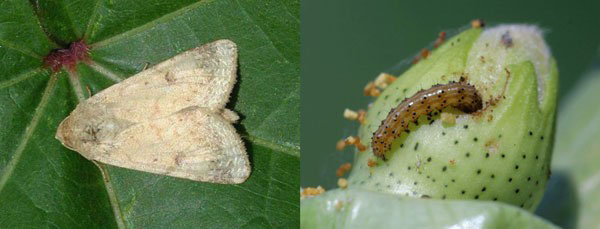
Figure 3. Adult moth (left) and bollworm larvae (right). Photo courtesy of J.P. Michaud, Kansas State University Entomology.
The full-grown larva is about 1½ inches long with a light-colored head capsule. The predominant body color may range from pink or green to various shades of tan or dark brown. Dark stripes run lengthwise on the body. Larvae begin feeding on leaf tissue and small squares, then move down the plant and damage the larger squares and bolls. Bollworm management is based on scouting for eggs or small larvae. Thresholds differ for bollworm-resistant and bollworm-susceptible cotton. Treatment for non-Bt cotton is recommended when 10 eggs or five small worms per 100 plants are present during early bloom in late July and early August. Treatment for Bt cotton is recommended if fruit and boll damage is excessive, as indicated by 10 small worms (¼- to ⅜-inch long) per 100 plants or six small worms in 100 flowers.
Control Options for Bollworms
The use of Bt cotton (WideStrike3™ and Bollgard® 3) is common in Kansas. However, it is important to note that bollworms must ingest the Bt toxin to be killed, and it may take up to 5 days from ingestion to death. After ingesting the toxin, susceptible larvae lose their appetite and stop feeding within a few hours. However, bollworm resistance to currently used Bt traits has been documented in other states. Rates of bollworm survival increase as larvae mature and exceed ½-inch long or five days old.
Preventive treatments applied during the pre-bloom period are discouraged because they can destroy beneficial insects (i.e., natural predators) that help keep bollworms and other pests under control. Chemical control (Table 2) is rarely effective after larvae exceed ½ inches in length (five days old, third instar). Once cotton has blooms within four to five nodes of the top of the plant (i.e., cutout), the need for bollworm control has usually passed.
The value of late-season treatments depends on the weather. Because of the relatively short growing season for cotton in Kansas compared to most of the US Cotton Belt, late blooms can add little to final yields in most cases. Because of this, late-season treatments are usually not justified unless populations are heavy and the weather remains favorable.
Table 2. Products registered in Kansas for the control of bollworm in cotton*
|
Active Ingredient |
Trade Name |
Mode of Action Class |
Rate |
|
acephate |
numerous |
1B |
8-16 fl oz/a |
|
acetamiprid |
Assail 30SG |
4A |
1.5-2.5 oz/a |
|
alpha-cypermethrin |
Fastac CS |
3A |
2.6-3.6 fl oz/a |
|
beta-cyfluthrin |
Baythroid XL |
3A |
1.6-2.6 fl oz/a |
|
bifenthrin |
Brigade |
3A |
2.56-6.4 fl oz/a |
|
Fanfare |
3A |
2.6-6.4 fl oz/a |
|
|
Hero |
3A |
5.2-10.3 fl oz/a |
|
|
Sniper |
3A |
2.6-6.4 fl oz/a |
|
|
bifenthrin + avermectin |
Athena |
3A+6 |
7-17 fl oz/a |
|
bifenthrin + chlorantraniprole |
Elevest |
3A+28 |
5.6-9.6 fl oz/a |
|
bifenthrin + imidicloprid |
Tempest |
3A+4A |
5.1-7.7 fl oz/a |
|
chlorantraniprole |
Coragen eVo |
28 |
1.2-2.5 fl oz/a |
|
chlorpyrifos |
Chlorpyrifos 4E |
1B |
1.5-2.0 pints/a |
|
esfenvalerate |
Asana XL |
3A |
5.8-9.6 fl oz/a |
|
gamma-cyhalothrin |
Proaxis |
3A |
3.20-5.12 fl oz/a |
|
Declare |
3A |
1.28-2.05 fl oz/a |
|
|
imidicloprid |
Provoke |
4A |
1-2 fl oz/a |
|
Sherpa |
4A |
2.5-5.0 fl oz/a |
|
|
Macho 4.0 |
4A |
1-2 fl oz/a |
|
|
indoxacarb |
Steward EC |
22 |
9.2-11.3 fl oz/a |
|
lambda-cyhalothrin |
Warrior II w/Zeon |
3A |
1.6-2.56 fl oz/a |
|
Silencer |
3A |
3.20-5.12 fl oz/a |
|
|
lambda-cyhalothrin + chlorantraniprole |
Besiege |
3A+28 |
6.5-12.5 fl oz/a |
|
methomyl |
Nudrin SP |
1A |
0.5-0.75 lbs./a |
|
nucleopolyhedrovirus |
Heligen |
31 |
2.0 fl oz/a |
|
spinosad |
Entrust SC |
5 |
3-6 fl oz/a |
|
Tracer |
5 |
1.4-2.9 fl oz/a |
|
|
zeta-cypermethrin |
Mustang Maxx |
3A |
2.64 -3.6 fl oz/a |
*For use rates and any other information relative to any insecticide listed in these tables, always consult the actual label on the product. Tables are not an exhaustive list of registered products.
For more information on insect pest management in cotton, see the 2026 Cotton Insect Pest Management bulletin available from the KSRE Bookstore: https://bookstore.ksre.ksu.edu/item/cotton-insect-pest-management-2026_MF2674
The use of trade names is for clarity to readers and does not imply endorsement of a particular product, nor does exclusion imply non-approval. Always consult the insecticide label for the most current use requirements. Users should read and follow all label directions.
Logan Simon, Southwest Area Agronomist – Garden City
lsimon@ksu.edu
Anthony Zukoff, Extension Entomologist – Garden City
azukoff@ksu.edu