Quickly Maturing Cool-Season Forages
Many farmers have noticed cool-season crops of wheat, triticale, oats, and barley rushed through growth stages following a warm fall, winter, and spring with limited height and seemingly early heading and maturing (Figure 1). Cool-season perennial forages, such as smooth brome and tall fescue, have not been excluded from this rapid maturing. In many situations, the perennial forage has limited leaf area and height with heads emerging. This has led to the question about what this means for haying and grazing.
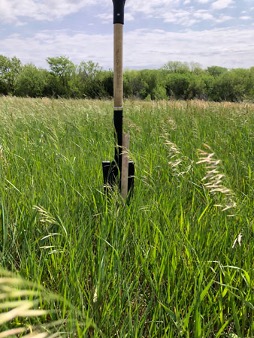
Figure 1. Example of a short stand of smooth brome in Jackson County, Kansas. Photo credit David Hallauer, K-State Meadowlark Extension District.
Considerations for haying
Once seed heads emerge, this signals a shift from vegetative to reproductive growth. Energy is prioritized for stem elongation and seed head production versus leaf production, which also increases overall lignin content and lowers digestibility. Because of this shift in growth priority, little if any leafy biomass accumulation can be expected, and the heading stage should drive harvest to ensure high-quality hay. As these cool-season species rapidly grow, check on them often and be ready to pull the trigger on harvest based on the stage of maturity, which is ideally between early heading and flowering stages. A recent eUpdate provides more information on considerations to improve hay quality (https://eupdate.agronomy.ksu.edu/article/considerations-to-improve-hay-quality-689-4). Raising the mower to leave 4 to 6 inches of stubble would benefit cool-season forages by allowing them to recover and build biomass, helping mitigate biotic stressors like fall armyworms. A close eye on the weather forecast for dry weather to wilt for silage or dry down a hay crop is also important.
Considerations for grazing
Grazed forages can also benefit from utilization prior to maturity by keeping the plant in a vegetative state longer, thereby maintaining higher quality. If pastures begin to get ahead of us, flash grazing at a high stocking rate over a short period (one or a few days) can slow down growth and keep plants in a vegetative state longer. The goal is to quickly set the plant back a bit without too much stress, taking 50% or less of the available forage before moving on. Clipping off early seed heads through grazing (or haying, mowing, etc.) can allow the development of additional leafy vegetative growth by removing the terminal meristem (seed head), which suppresses growth in growing points that can produce new leaves. Keep in mind that grasses use considerable energy to produce new tillers, and clipping grasses continuously in this manner can exhaust root reserves and eventually kill plants. Use caution in taking this approach to keep grasses in a vegetative state in stands that are already stressed or on grasses that rely on seed to reproduce.
Take-home message
- Cool-season grasses may be heading out a bit early this year, without the stand height we would hope and expect before harvesting.
- Resist the temptation to wait until after the stands are overly mature to cut. Quality will decline as the stand matures, and cutting earlier rather than later can allow additional growth to accumulate before going into dormancy during the height of summer.
- Grazing at the early heading stage can keep grasses in a state of vegetative growth and avoid declining forage quality associated with reproductive growth, but keep in mind that stressed stands can be weakened further with repetitive harvesting.
Additional Resources
Tall Fescue Production and Utilization: https://bookstore.ksre.ksu.edu/download/tall-fescue-production-and-utilization_C729
Smooth Brome Production and Utilization (under revision): https://bookstore.ksre.ksu.edu/pubs/smooth-brome-production-and-utilization_C402.pdf
Grass Growth (Rangelands Gateway): https://rangelandsgateway.org/topics/rangeland-ecology/grass-growth
Tina Sullivan, Northeast Area Agronomist
tsullivan@ksu.edu
Molly Reichenborn, Range Management Extension Specialist
mreichenborn@ksu.edu