Chinch Bugs: Time to Start Monitoring Wheat and Adjacent Corn or Sorghum
It is about that time of year again, at least weather-wise, to be on the lookout for chinch bugs. With questions already coming in about chinch bugs, now is a good time to refresh everyone's memory about this pest and review management options.
Life Cycle and Movement
Chinch bugs overwinter in Kansas as adults, usually under the frass or around the base of bunch grasses. But in milder winters, they have successfully overwintered in no-till fields that have relatively thick residue.
When wheat breaks dormancy, these adults move from the overwintering site to the wheat, where they begin feeding, mating, and laying eggs. These adults do not feed as much as the nymphs, but occasionally, if conditions are relatively dry, this feeding may stress some of the wheat. As the eggs hatch and nymphs emerge, they begin sucking the juice from wheat plants until the plants begin to dry. As the wheat senesces and the plants lose their moisture, these nymphs must move to find more succulent plants. Thus, any corn or sorghum adjacent to these infested wheat fields attracts this "walking" generation.
Seed Treatments Help, but Have Limits
All corn seed and most sorghum seed are pretreated with an insecticide. These seed treatments work. However, remember the bugs must suck a little of the juice from the plant to get a dose of the insecticide. If there are enough bugs and enough of the plant's fluid is removed, this feeding may still result in the plant's death, even though it kills the bugs. Most seed treatments protect the seed and seedling for about 30 days after planting.
Scouting Recommendations
As the wheat starts senescing, it is a great time to assess or monitor chinch bugs. To scout:
- Move into the wheat field and push wheat aside in approximately 1-square-foot areas
- Count the number of chinch bugs present
- Repeat this process in several areas of the field
If averages reach one or more chinch bugs per square foot, management considerations may be warranted. This may include:
- Delaying planting in adjacent fields
- Considering a barrier treatment for emerged corn before bugs move from wheat into corn
The youngest chinch bug nymphs are reddish-pink but gradually become gray as they age (Figure 1), until they molt into an adult (Figure 2).
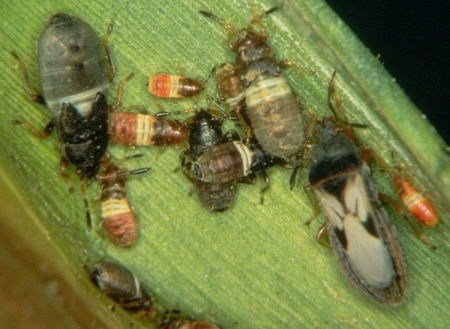
Figure 1: Chinch bug nymphs and an adult. Photo from K-State Entomology.
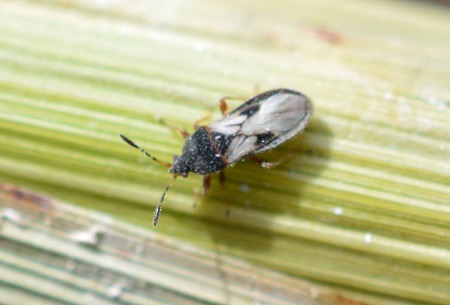
Figure 2: Adult chinch bug. Photo from K-State Entomology.
Why This Season Could Be Problematic
This may seem a little early to consider chinch bugs, but remember, the weather drives insect development, and we have had a relatively mild winter, so many insect populations seem to be a couple of weeks ahead of their average development time. During the last 3-4 years, Kansas has had relatively large chinch bug populations going into fall and overwintering. This has led to relatively large populations of chinch bugs throughout the next growing seasons. This year, so far, seems to be setting up the same, so I expect healthy populations of chinch bugs again this summer.
For more information about chinch bug management, please refer to the K-State 2026 Sorghum and Corn Insect Management Guides.
Corn Insect Pest Management - https://bookstore.ksre.ksu.edu/pubs/MF810.pdf
Sorghum Insect Pest Management - https://bookstore.ksre.ksu.edu/pubs/MF742.pdf
Jeff Whitworth, Entomology Extension Specialist
jwhitwor@ksu.edu